The Dawn of Autonomous Naval Warfare: Ukrainian Forces Secure Victory in World’s First Drone Boat Duel

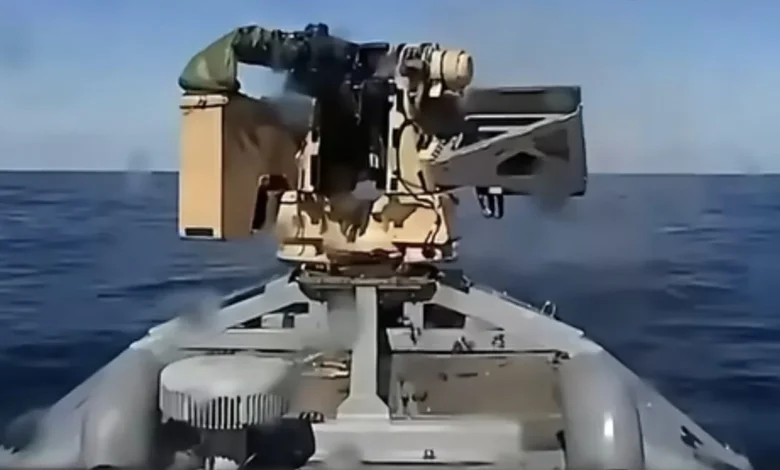
In a historic escalation of modern maritime conflict, the Black Sea has become the stage for the world’s first recorded engagement between two uncrewed surface vessels (USVs). On September 12, a Ukrainian naval drone successfully intercepted and destroyed a Russian explosive-laden drone boat, marking a significant milestone in the evolution of robotic warfare. This engagement, captured in high-definition footage, underscores a rapid shift in naval doctrine, where autonomous systems are no longer merely reconnaissance tools but active, lethal combatants capable of engaging one another without direct human presence on the water.
The Chronology of the Engagement
The incident unfolded in the strategic waters of the Black Sea, a region that has become the primary laboratory for drone-on-drone warfare. According to reports from Ukraine’s Defense Intelligence (HUR), operators monitoring the maritime theater detected an unidentified, suspicious signature moving toward a Ukrainian-held sector.
Upon closer inspection, the vessel was positively identified as a Russian Orcan-class USV. These craft, characterized by their jet-ski-style propulsion systems and low-profile hulls, are specifically engineered for kamikaze-style operations—intended to slam into hulls or port infrastructure to trigger high-explosive payloads.
The Ukrainian response was swift and deliberate. A Sargan-3000 drone boat, equipped with advanced sensor suites and a sophisticated weapon system, was dispatched to intercept the intruder. The ensuing pursuit lasted several minutes, with the Ukrainian drone closing the distance while maintaining a tactical advantage. At a range of approximately one kilometer, the Ukrainian Sargan-3000 engaged its onboard 12.7 mm machine gun, mounted on a remote weapon station (RWS) provided by the Norwegian defense contractor Kongsberg.
Footage released by the Ukrainian Navy reveals a precise opening volley. The initial rounds successfully targeted the Russian drone’s communication antenna, effectively blinding the vessel and severing the link between the remote operator and the craft. Following the initial disabling strike, the Ukrainian drone continued its barrage, methodically riddling the Russian USV until it lost buoyancy and sank.
Technical Specifications and Tactical Context
The battle highlights the disparity in technological sophistication currently defining the maritime theater of the Russia-Ukraine war. The Russian Orcan drone is a relatively simple, expendable platform designed for saturation attacks. These vessels frequently operate in tandem with aerial counterparts, most notably the Iranian-designed Geran-2 drones. In these coordinated missions, the aerial drones serve a dual purpose: they function as reconnaissance eyes, providing a real-time feed to operators, and act as communication relays, extending the operational range of the drone boats far beyond the line-of-sight limits of traditional radio control.
In contrast, the Ukrainian Sargan-3000 represents a more robust iteration of maritime robotics. By integrating a remote weapon station, Ukraine has transformed what was originally an explosive delivery vehicle into a multi-role maritime hunter-killer. The Kongsberg-supplied RWS allows for high-precision firing even while the host vessel is maneuvering at high speeds across choppy water. This capability to engage targets from a kilometer away provides a critical safety buffer, allowing Ukrainian operators to neutralize threats before they can enter the terminal phase of their own attack runs.
The Evolution of Uncrewed Warfare
The September 12 engagement is the logical, albeit chilling, conclusion of trends observed throughout the conflict. Since the early days of the full-scale invasion, the Black Sea has been transformed by the asymmetric use of sea drones. Ukraine’s success in utilizing these platforms to threaten and eventually push back the Russian Black Sea Fleet has been one of the most significant strategic developments in naval history since the introduction of the guided missile.
Military analysts, including H.I. Sutton, a leading authority on naval systems, have long predicted this transition. "It was inevitable that there would be USV-on-USV combat," Sutton noted in recent commentary. "We have seen the same evolution in the air and on the ground."
The progression follows a predictable pattern:
- Initial Deployment: Drones are used for reconnaissance and observation.
- Offensive Integration: Drones are armed for strike missions against fixed targets.
- Counter-Drone Development: Defensive measures are developed to protect assets.
- Autonomous Duel: Platforms are designed specifically to hunt and destroy the opponent’s drones.
This cycle is currently being mirrored in the air, where Ukrainian and Russian FPV (first-person view) drones are now frequently used to down other reconnaissance drones. The expansion of this behavior into the maritime domain suggests that the future of naval combat will be increasingly defined by "counter-robotics," where the ability to detect and destroy enemy autonomous systems becomes as vital as the ability to strike enemy warships.
Strategic Implications for Maritime Security
The implications of this engagement extend far beyond the immediate tactical victory. The destruction of the Russian Orcan drone signals that the Black Sea is no longer a permissive environment for uncrewed craft. As both sides invest heavily in anti-drone maritime capabilities, the cost of operating these systems will rise, and the complexity of naval encounters will increase.
For global naval powers, the Ukrainian experience provides a sobering case study. Traditional capital ships—frigates, destroyers, and cruisers—are increasingly vulnerable to low-cost swarms of USVs. The success of the Sargan-3000 demonstrates that the most effective counter to a drone boat may well be another drone boat. This realization is likely to influence future procurement strategies for navies worldwide, shifting budgets toward the development of autonomous defensive networks capable of clearing sea lanes of hostile robotics.
Furthermore, the integration of remote weapon stations on smaller, agile vessels represents a shift toward "distributed lethality." By dispersing combat power across a larger number of small, unmanned platforms, commanders can create a more resilient defensive grid that is difficult to saturate or disable through conventional means.
Official Reactions and Future Outlook
While neither the Russian Ministry of Defense nor the Ukrainian High Command has provided exhaustive technical details regarding the specific electronic warfare measures employed during the engagement, the success of the intercept suggests that Ukraine has achieved a high level of proficiency in maritime situational awareness.
The Ukrainian government media platform United24 and other official channels have used the incident to highlight the efficacy of Western-supplied technology—specifically the Norwegian-made weapon systems—when integrated into Ukrainian-engineered maritime platforms. This serves as a potent propaganda tool, demonstrating that Ukrainian ingenuity in adapting commercial and military hardware is yielding tangible results on the battlefield.
Looking ahead, military experts expect a rapid increase in the "hardening" of these drone boats. Future iterations of both Russian and Ukrainian USVs will likely feature improved sensor fusion, AI-driven target acquisition, and perhaps even basic autonomous interception logic that does not require constant input from a human operator. As the "human-in-the-loop" requirement becomes a bottleneck, the move toward "human-on-the-loop" or fully autonomous engagement systems appears increasingly inevitable.
The September 12 duel serves as a definitive turning point. The Black Sea has become the world’s first proving ground for a new era of naval warfare, one characterized by the cold, calculated efficiency of machines hunting machines. As this technology proliferates, the international community must grapple with the strategic, ethical, and legal challenges of autonomous maritime combat, a reality that is no longer theoretical, but a daily occurrence in the contested waters of Eastern Europe.